Cold Reads and Calm Minds: The Mental Edge Asian Poker Players Bring to Every Table
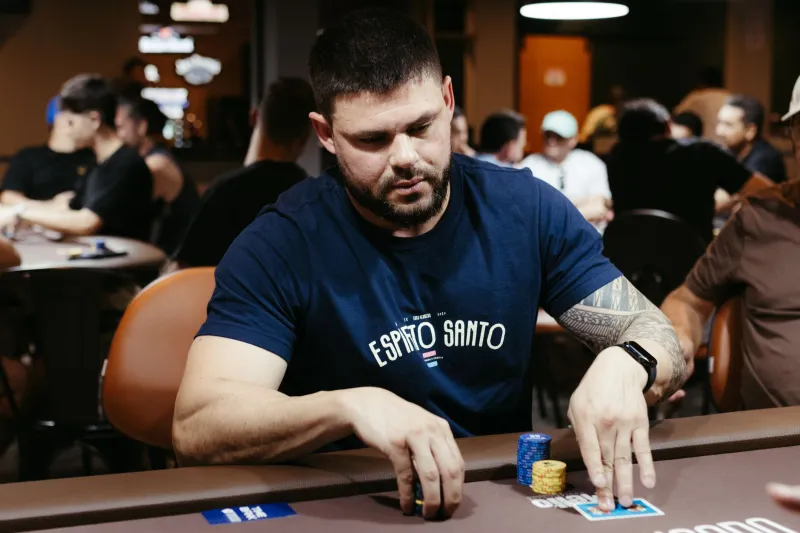
If you've been watching the World Series of Poker or any major international tournament circuit lately, you've probably noticed something: Asian players keep showing up deep in the money. Like, consistently. And while a lot of armchair analysts chalk it up to math skills or sheer volume of play, the real story is a lot more interesting — and a lot more psychological.
At VNXO88, we've always believed that understanding where gaming culture comes from makes you better at the games themselves. So let's get into it. What's actually going on inside the heads of Asia's top poker competitors, and how can US players at every level start borrowing those mental frameworks?
Patience Isn't Passive — It's a Weapon
American poker culture tends to celebrate aggression. Big bluffs, dramatic all-ins, the kind of plays that make ESPN highlight reels. And look, there's nothing wrong with that energy. But one of the first things you notice studying Asian tournament players is a fundamentally different relationship with patience.
In many East Asian cultural traditions, waiting is not weakness — it's strategy. The concept of wu wei from Taoist philosophy, loosely translated as "effortless action" or knowing when not to act, shows up in how players like Qui Nguyen or Paul Phua approach hands. They're not sitting there being passive. They're gathering information, controlling the emotional temperature of the table, and waiting for the moment when action becomes optimal rather than just exciting.
For US players used to three-betting light and keeping up constant table pressure, this is genuinely hard to internalize. But here's a simple exercise: the next time you're in an online session on VNXO88, pick one tournament and commit to folding anything below a certain threshold for the first three levels. No exceptions. Notice how your reads on other players sharpen when you're not constantly defending your own decisions.
Emotional Regulation as a Core Skill
Tilt is the great equalizer in poker. Doesn't matter how technically sound your game is — if you go on tilt after a bad beat, you're giving money away. And this is an area where the psychological discipline embedded in Asian competitive gaming culture creates a real, measurable edge.
A lot of this comes down to something researchers call "emotional granularity" — the ability to identify and name your emotional state precisely rather than just feeling a general wave of frustration or excitement. Top Asian players, particularly those who've come up through cultures that emphasize self-control and face-saving in social contexts, tend to have highly developed internal monitoring systems.
Practically speaking, this means building a pre-session ritual. Before you log into any serious session, spend five minutes doing a genuine emotional inventory. Are you tired? Annoyed about something unrelated to poker? Overconfident after a recent win? Naming those states before you play gives you the mental distance to manage them at the table. It sounds almost too simple, but the data on performance psychology backs it up hard.
The Bankroll Philosophy Nobody Talks About
Here's a cultural contrast that doesn't get enough airtime: the way risk and money are conceptualized in many Asian gaming traditions is fundamentally different from the "go big or go home" American default.
In countries like Vietnam, China, and South Korea, where gambling has deep historical roots but also carries serious social consequences, serious players often develop an almost ritualistic approach to bankroll management. The bankroll isn't just a stack of chips — it represents discipline, respect for the game, and long-term thinking. Losing it all in one session isn't just a financial setback; it's a kind of philosophical failure.
Translated into practical terms for US online players: the 5% rule. Never put more than 5% of your total bankroll into any single tournament or cash session. It sounds conservative, but it's the kind of rule that keeps you in the game long enough for skill to actually matter. Variance is brutal in poker. The players who survive variance are the ones who get to demonstrate their edge over time.
Reading the Room (Even Online)
One of the most underrated skills in Asian poker culture is social intelligence — specifically, the ability to read group dynamics and individual psychology simultaneously. In face-to-face games, this is obvious. But what about online play?
Here's the thing: behavioral patterns still exist in digital environments. Bet sizing tells, timing patterns, how quickly someone calls versus raises — these are all readable signals. Asian players who've grown up in gaming cultures that prize observation tend to be meticulous data gatherers, even in online formats.
If you're playing on VNXO88 or any online platform, start keeping a simple mental (or actual) log of opponent tendencies. Does this player always min-raise with strong hands? Do they take longer to act when they're unsure? These micro-patterns add up to a significant informational advantage over the course of a session.
The Long Game Mindset
Perhaps the deepest lesson US players can take from Asian poker psychology is the concept of thinking in longer time horizons. American gaming culture, shaped by a broader cultural obsession with immediate results, often produces players who evaluate their game session by session or even hand by hand.
Top Asian competitors think in months and years. A single bad tournament is data, not disaster. A downswing is a period for analysis and adjustment, not a crisis of confidence. This isn't just motivational fluff — it's a cognitive framework that literally changes how you process losses and wins in the moment.
Try this: after every session, instead of asking "did I win or lose," ask "did I make good decisions?" Separate outcomes from process. Over time, this reorientation does something powerful to your game — it moves your attention from the things you can't control (cards, luck, other players' decisions) to the only thing you actually can control, which is the quality of your own thinking.
Bringing It All Together
The dominance of Asian players on the international poker circuit isn't some mysterious cultural magic. It's the product of specific, learnable mental habits: disciplined patience, emotional self-awareness, bankroll respect, sharp observation, and long-term thinking. These aren't exotic concepts — they're just principles that happen to be more deeply embedded in certain gaming traditions than in others.
The good news? You don't have to be born into those traditions to benefit from them. You just have to be willing to think differently about what it means to be a good poker player.
At VNXO88, we're all about bringing the best of Asian gaming culture to players everywhere. Whether you're grinding online tournaments or just looking to sharpen your mental game, the frameworks are right there for the taking. The chips are on the table — it's just a question of how you play them.