Odds Are You're Paying Too Much: The Hidden Margin Gap Between Asian and Western Sportsbooks
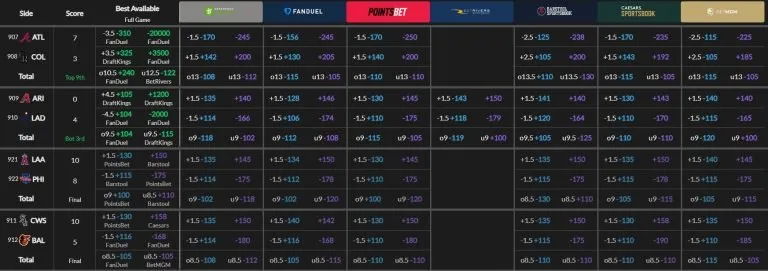
Photo: sportsbook odds comparison digital screen Asian betting market, via www.sportsbookscout.com
The Number You Never See Is the One That Matters Most
Every time you place a bet, there's a number hiding inside the odds that doesn't belong to you. It's the house's cut — the margin baked into the pricing before you've even decided what to wager. In the US, most mainstream sportsbooks treat this margin like furniture: it's always there, you just stop noticing it.
Asian sportsbooks think about this number very differently. And once you understand how, you'll never look at a betting line the same way again.
The standard American sportsbook operates on a margin somewhere between 4.5% and 8%, depending on the sport and the market. That might not sound like much, but compounded over hundreds of bets, it's a significant drag on your long-term returns. Asian books — particularly the major exchange-style platforms that dominate Southeast Asian and Hong Kong markets — routinely run margins between 1% and 3%. Some go even lower on high-volume events.
That's not a rounding error. That's a structural difference in how the business model is built.
Why Asian Books Price the Way They Do
The short answer is volume and competition. Asian betting markets are among the most liquid in the world, particularly for soccer (football), basketball, and certain forms of live in-play wagering. When millions of dollars move through a single event, operators don't need fat margins to stay profitable — they need thin margins and massive turnover.
This creates a fundamentally different pricing philosophy. Western books, especially in the newly regulated US market, are still operating with legacy margin assumptions. They're pricing for a customer base that's less likely to shop around, less sophisticated about line value, and often betting recreationally rather than strategically.
Asian books, by contrast, have spent decades competing for sharp money — bettors who absolutely will shop lines, who understand expected value, and who will leave instantly if the price isn't right. That pressure forces tighter, more accurate odds.
The result? When you compare how the same NFL game, NBA matchup, or international soccer fixture is priced across markets, you'll often find meaningful discrepancies — and those discrepancies almost always favor the Asian-market line.
A Real-World Example That Hits Different
Let's make this concrete. Take a standard NBA game between two evenly matched teams. A typical US sportsbook might price both sides at -110, meaning you risk $110 to win $100. That's a built-in margin of about 4.76%.
The same game on a major Asian-style book might be listed at -105 on both sides, or even closer to even money on a sharp exchange. That's a margin closer to 2.4% — nearly half what the American book is charging.
Over a season of betting, that difference compounds in ways that are genuinely significant. A bettor placing 500 wagers at $100 each is paying roughly $238 more in implied margin per season on the American book compared to the Asian equivalent. That's not theory — that's money that could be staying in your bankroll.
The Asian Handicap Wrinkle
One of the most important — and most misunderstood — tools in the Asian sportsbook arsenal is the Asian Handicap. Unlike traditional point spreads, Asian Handicaps eliminate the possibility of a push by using fractional lines (think 0.5, 1.5, 2.5) and split-ball bets that divide your stake across two adjacent handicaps.
This structure does two things that matter for value hunters. First, it removes the draw outcome from two-outcome markets, which increases market efficiency. Second, it forces books to price more precisely because there's no tie safety valve to absorb mispriced lines.
For US players used to standard spreads, Asian Handicap betting has a learning curve. But the reward for climbing that curve is access to sharper, tighter markets where your edge — if you have one — actually survives contact with the house margin.
How to Spot the Value Gap Yourself
You don't need a math degree to start identifying pricing discrepancies between market types. Here's a simple framework:
Step 1: Convert everything to implied probability. Divide 100 by the decimal odds (or use a converter for American odds). This tells you what percentage chance the book thinks each outcome has.
Step 2: Add the implied probabilities together. In a fair market, they'd total 100%. The amount they exceed 100% is the margin.
Step 3: Compare the same event across book types. When Asian-style lines show meaningfully lower totals, that's where the value lives.
The gap won't always be massive on any single bet. But consistent access to lower-margin markets is one of the few genuine edges available to recreational bettors who want to play smarter over the long run.
What This Means for US Players Right Now
The US sports betting market is still young. Regulatory frameworks are still being sorted out state by state, and most major operators are focused on acquisition rather than margin optimization. That creates a window — maybe a few years, maybe less — where the pricing gap between Asian-influenced books and mainstream US books remains wide enough to matter.
At VNXO88, we've built our platform around the Asian market model for exactly this reason. Tighter margins, sharper lines, and a betting structure designed for players who actually want to win — not just play. Understanding how the odds are built is the first step toward making them work for you instead of against you.
The house edge is real. But it's not fixed. And knowing which market prices it lowest is one of the smartest moves any US bettor can make.