Riding the Wave: How Asian Betting Markets Turn Volatility Into Opportunity (And What US Players Can Learn)
If you've ever watched an NBA game while monitoring a US sportsbook's live betting feed, you've probably noticed something: the odds move, but they move carefully. Methodically. Like a ship turning in open water — slow, deliberate, managed.
Now imagine watching that same game through an Asian betting exchange. The odds don't turn like a ship. They move like a school of fish — fast, fluid, and constantly reacting to every possession, foul, and momentum shift in near real time. It's a different world. And for US players who learn to navigate it, it can be a genuinely profitable one.
The difference isn't accidental. It reflects deep structural distinctions in how Asian and Western betting markets are designed, who they're built for, and how they price the uncertainty that makes sports betting interesting in the first place.
The Architecture of Asian Volatility
To understand why Asian markets move differently, start with the infrastructure. The dominant model in Asian betting — particularly through exchanges and the major offshore books based in the Philippines and Curacao — is designed to accommodate massive volume from sophisticated bettors. These platforms compete on odds quality and limit size, not on promotional bonuses or parlay insurance.
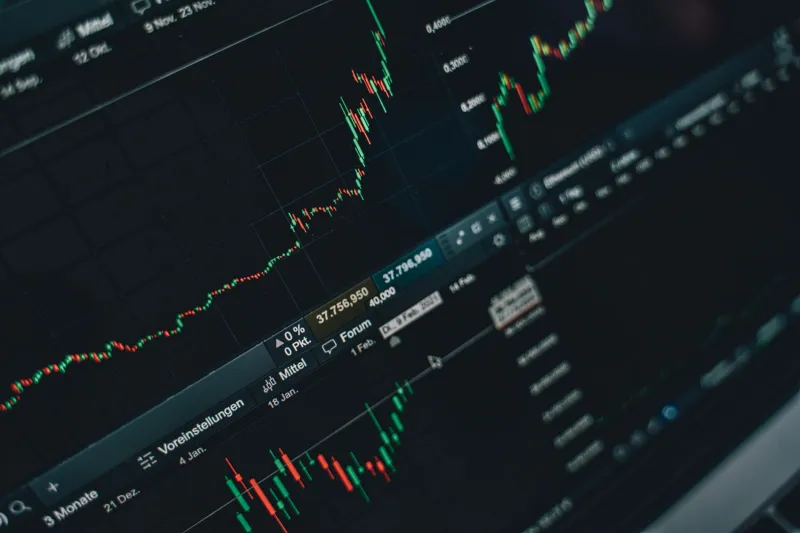
That competitive pressure creates tighter margins and faster line movement. When new information enters the market — a key player picking up a foul, a starting pitcher's pitch count running high, a basketball team's defensive rotation breaking down — Asian books and exchanges reprice almost immediately. The market is, in financial terms, more efficient.
US books, by contrast, often manage live betting more conservatively. Lines are updated less frequently, spreads are wider during in-play windows, and maximum bet sizes on live markets are typically lower. This protects the book from getting picked off by sharp live bettors but also means the market is slower to reflect reality.
For a player who can read a game in real time, that difference is enormous.
Asian Handicap: The Volatility Vehicle
No discussion of Asian betting markets and volatility is complete without talking about the Asian handicap — the betting format that, more than any other, defines how these markets approach risk.
For US players unfamiliar with it: Asian handicap betting eliminates the draw outcome by assigning fractional or quarter-point handicaps to teams, splitting stakes across adjacent lines. It's more complex than a standard point spread but dramatically reduces the bookmaker's built-in edge and creates a more dynamic, liquid market.
The format is particularly powerful in live betting contexts. Because the handicap adjusts continuously with the score, a trailing team that's playing well can still offer genuine value even when losing. A US bettor conditioned to think in terms of moneylines and standard spreads might look at a soccer match and see a team down 1-0 as a losing proposition. An Asian handicap market might be offering that same team at a price that reflects a real probability of a comeback — and a sharp bettor who's watching the game closely can identify when that price is mispriced.
Practical example: You're watching a Champions League match. Team A goes down 1-0 in the 30th minute but is clearly dominating possession and creating chances. A US book might move Team A's moneyline from -150 to +110 and call it a day. An Asian exchange might offer Team A at a +0.5 handicap at even money — meaning you win if they draw or win, and lose only if they lose by more than one. The nuance in that pricing can represent significant value if you know what you're watching.
Reading Line Movement as a Live Signal
One of the most transferable skills from Asian betting markets to any betting context is learning to read line movement as an informational signal rather than just a pricing update.
In Asian exchanges particularly, where large volumes of sharp money move through the market constantly, sudden odds shifts often precede public information. A line that moves hard in one direction before any obvious news — a pre-game injury report, a lineup change, a weather update — is often the market pricing in something that sharp bettors with better information already know.
US players who learn to monitor Asian market prices alongside their domestic book's lines can sometimes identify these signals early. If an Asian exchange moves a football total significantly in the 30 minutes before kickoff while a US book holds its number, that divergence is worth paying attention to. It doesn't guarantee anything, but it's data — and data beats intuition.
Some dedicated bettors have built simple monitoring setups that track Asian exchange prices alongside US book lines in real time, flagging divergences above a certain threshold as potential value plays. It's not a magic system, but it's a structured way to incorporate market intelligence that most casual US bettors completely ignore.
The Liquidity Factor: Why It Matters More Than You Think
Liquidity — the volume of money flowing through a market — directly affects how volatile and informative that market is. Asian betting exchanges, particularly for major soccer leagues, handle betting volumes that dwarf US sportsbook handles on equivalent events. More money means more participants, which means the price reflects more collective information.
For US players betting on international sports through domestic books, this creates an interesting dynamic. The US book is often pricing its odds off the Asian market rather than generating its own independent line. The tail wags the dog. Understanding that relationship means understanding that Asian markets are often the primary source of truth for pricing on global sports events — and that monitoring them directly gives you access to that truth before it fully propagates to US platforms.
Adapting Your Strategy
So what does all of this mean practically for a US player trying to improve their results?
First, start paying attention to Asian market prices on events you regularly bet. Platforms that aggregate global odds make this easier than ever. Notice when and how Asian lines diverge from what your US book is offering.
Second, get comfortable with Asian handicap markets. Many US-facing platforms now offer them, and the lower margins make them structurally better value than equivalent standard spread markets on the same events.
Third, develop a live betting approach that's informed by momentum rather than just score. Asian markets are built for bettors who watch games actively and react to what they're seeing. If you're betting live while also checking your phone and half-watching, you're playing a game you're not equipped to win.
At VNXO88, the intersection of Asian betting sophistication and US player ambition is exactly what we're built around. Volatility isn't something to fear — it's where the edge lives, for players who know how to find it.